


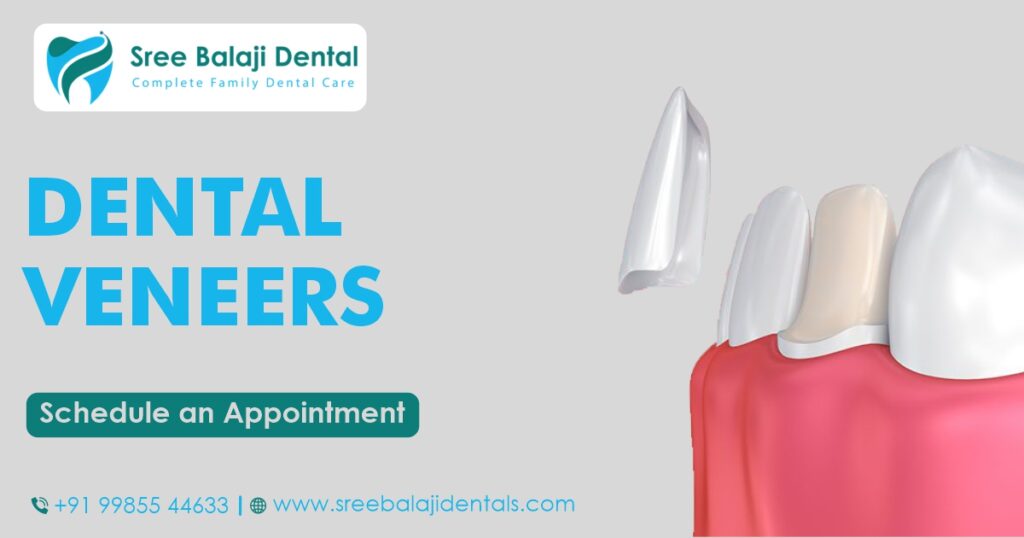
Dental veneers are a popular cosmetic dental treatment used to improve the appearance of teeth. Veneers are thin shells made of porcelain or composite resin that are custom-made to fit over the front surface of the teeth, providing a natural and attractive appearance.
Uses of Dental Veneers
Dental veneers can be used to address a wide range of cosmetic dental concerns, including:
01
Discolored Teeth
Teeth that are severely stained or discolored can be improved with veneers, as they can cover the discoloration and create a brighter, more attractive smile.
02
Chipped or Broken Teeth
Teeth that are chipped, cracked, or broken can be restored with veneers, providing a natural and long-lasting solution.
03
Gaps and uneven teeth
Veneers can be used to close gaps between teeth and create a more even appearance.
04
Misshapen teeth:
Teeth that are misshapen or too small can be improved with veneers, creating a more harmonious and balanced smile.
Types of Dental Veneers
There are two types of dental veneers: porcelain and composite resin.
01
Porcelain Veneers
Porcelain veneers are the most common type of veneer and are made of thin layers of porcelain that are bonded to the teeth. Porcelain veneers provide a durable and natural-looking solution and can last up to 20 years with proper care.
02
Composite Resin Veneers
Composite resin veneers are made of a tooth-colored resin that is applied to the teeth and sculpted into shape. While composite resin veneers are less expensive than porcelain veneers, they are not as durable and typically last 5-7 years.
The Veneer Procedure
The veneer procedure typically requires two to three appointments. During the first appointment, the dentist will prepare the teeth by removing a thin layer of enamel to make room for the veneer. Then, an impression of the teeth is taken, which is used to create the custom-made veneers.
At the second appointment, the veneers are bonded to the teeth using a special dental cement. The dentist will check the fit and color of the veneers before permanently bonding them to the teeth.
Aftercare
Dental veneers require proper care and maintenance to ensure their longevity. It’s important to brush and floss regularly and avoid biting into hard objects that could damage the veneers. Routine dental checkups and cleanings are also important to maintain oral health and check the condition of the veneers.
Conclusion
Dental veneers are a popular and effective cosmetic dental treatment that can improve the appearance of teeth and create a more attractive smile. They can be used to address a wide range of cosmetic dental concerns, from discolored teeth to chipped or broken teeth. While porcelain veneers provide a durable and long-lasting solution, composite resin veneers offer a more affordable option. Proper care and maintenance are crucial to ensuring the longevity of dental veneers, and routine dental checkups and cleanings are important to maintain oral health. If you’re considering dental veneers, consult with your dentist to determine if they are the right choice for your specific dental needs.
Get in touch
